Domestic manufacturing refers to the production of goods within a country's borders, emphasizing the creation and assembly of products in local facilities rather than outsourcing to international locations. This concept is integral to onshore manufacturing, which focuses on leveraging local resources, labor, and technology to boost national economic growth, enhance supply chain security, and ensure compliance with national standards.
Understanding Domestic Manufacturing in OT/IT Cybersecurity
In the context of Operational Technology (OT) and Information Technology (IT) cybersecurity, domestic manufacturing plays a pivotal role in safeguarding critical infrastructure. By producing and assembling cybersecurity appliances and components locally, organizations can maintain stricter control over the supply chain. This reduces the risk of vulnerabilities being introduced through third-party vendors and ensures adherence to national cybersecurity standards.
Domestic manufacturing also supports the implementation of robust cybersecurity frameworks such as NIST 800-171, which prescribes guidelines for protecting controlled unclassified information in non-federal systems. By manufacturing domestically, companies can ensure compliance with these standards, minimizing the risk of data breaches and cyber threats.
Importance for Industrial, Manufacturing & Critical Environments
For industrial, manufacturing, and critical environments, domestic manufacturing is not just a matter of economic strategy but a critical factor in national security. Industries such as aerospace, defense, energy, and healthcare rely heavily on secure and reliable components. Local production ensures that these components are less likely to be compromised, as the manufacturing process is subjected to stringent national security regulations.
In critical environments, where downtime can lead to significant economic and safety repercussions, the assurance of product integrity and security is paramount. Onshore manufacturing allows for closer collaboration between production and cybersecurity teams, fostering innovation and rapid response to potential threats.
Relevant Standards
Several standards emphasize the importance of secure manufacturing processes, including:
- NIST 800-171: This standard focuses on the protection of unclassified information in non-federal systems, underscoring the need for secure manufacturing processes.
- CMMC (Cybersecurity Maturity Model Certification): Specifically designed for the defense supply chain, CMMC requires that manufacturers meet specific cybersecurity practices to handle Department of Defense information.
- NIS2 Directive: A European Union directive aimed at enhancing network and information systems security across the EU, emphasizing the need for robust manufacturing processes to protect critical infrastructure.
- IEC 62443: A series of standards focused on improving the cybersecurity of industrial automation and control systems, highlighting the need for secure product development and manufacturing.
In Practice
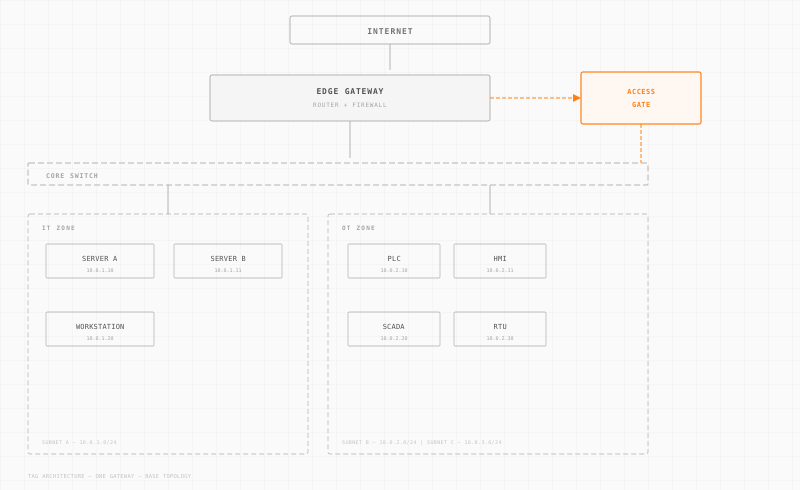
A practical example of domestic manufacturing in cybersecurity is the production of the Trout Access Gate within the United States. By manufacturing this critical cybersecurity appliance domestically, Trout Software can ensure that each unit meets rigorous security standards and is free from foreign threats. This control over the production process allows for rapid implementation of updates and patches, further securing the network environments it protects.
Moreover, domestic manufacturing allows companies to quickly adapt to regulatory changes and customer needs, maintaining a competitive edge in the cybersecurity market. By prioritizing onshore production, companies can foster innovation and resilience in their supply chains, ultimately leading to more robust and secure products.