Information Governance refers to the framework of policies, procedures, and controls that ensure the effective management, protection, and utilization of information within an organization. In the context of OT/IT cybersecurity, it encompasses the strategies and practices that safeguard sensitive data, maintain compliance with regulatory standards, and support the secure operation of critical infrastructure.
Understanding Information Governance in OT/IT Cybersecurity
In today's interconnected and digital world, Information Governance is crucial for organizations operating in industrial, manufacturing, and critical environments. These sectors often handle vast amounts of data, including sensitive operational technology (OT) and information technology (IT) assets, which are critical to maintaining the functionality and safety of essential services. Effective information governance ensures that data is managed securely, reducing the risk of breaches and operational disruptions.
Key Components
-
Data Governance: This involves the overall management of data availability, usability, integrity, and security. Data governance is a core component of information governance, focusing on policies and procedures that ensure data accuracy and consistency across the organization.
-
Information Management: This refers to the systematic handling of an organization's information. It includes the creation, use, storage, archiving, and disposal of data in compliance with applicable laws and regulations.
-
Compliance and Risk Management: Information governance also involves ensuring compliance with relevant standards and regulations, such as NIST 800-171, CMMC, and NIS2. These frameworks provide guidelines for safeguarding controlled unclassified information, enhancing cybersecurity measures, and ensuring the resilience of network and information systems.
-
Security Controls: Implementing robust security measures is vital to protecting data from unauthorized access and breaches. This includes employing encryption, access controls, and regular security audits.
Why It Matters
In industrial and critical environments, Information Governance is pivotal in safeguarding operations and promoting resilience against cyber threats. The rise of cyberattacks targeting critical infrastructure and manufacturing systems highlights the necessity for robust governance frameworks. Without proper information governance, organizations face increased risks of data breaches, operational disruptions, and non-compliance with regulatory requirements.
In Practice
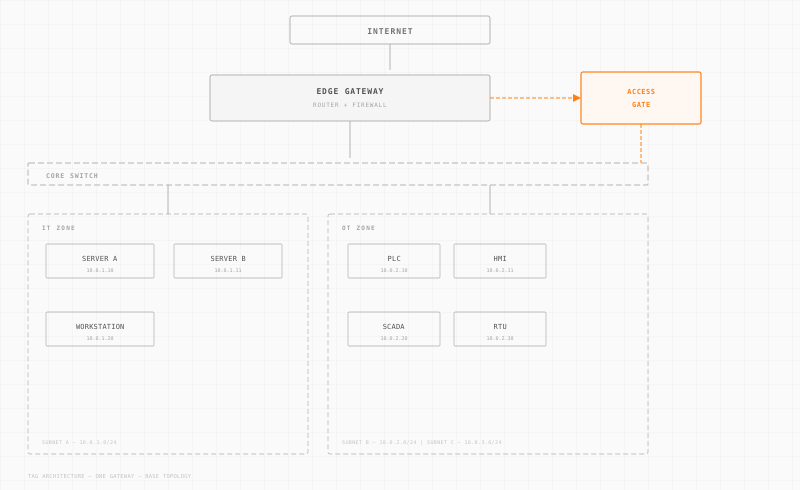
For example, a manufacturing plant utilizing a Trout Access Gate for Zero Trust network security must ensure that all data passing through its systems is properly governed. This includes verifying who has access to what information, how data is being protected, and ensuring that all processes align with standards like IEC 62443, which is specifically designed to secure industrial automation and control systems.
Organizations implementing information governance best practices can achieve several benefits, including enhanced data security, improved operational efficiency, and a stronger defense against cyber threats. By integrating comprehensive governance strategies, companies can effectively manage their information assets, ensuring they support business objectives while minimizing risks.
Related Concepts
- Data Privacy: The protection of personal data from unauthorized access and ensuring individuals' privacy rights.
- Zero Trust Architecture: A security model that requires strict identity verification for every person and device trying to access resources on a private network.
- Cybersecurity Compliance: Adhering to laws, regulations, and policies designed to protect data and IT systems.
- Risk Management: The process of identifying, assessing, and prioritizing risks followed by coordinated efforts to minimize their impact.
- Data Integrity: Ensuring the accuracy and consistency of data over its lifecycle.