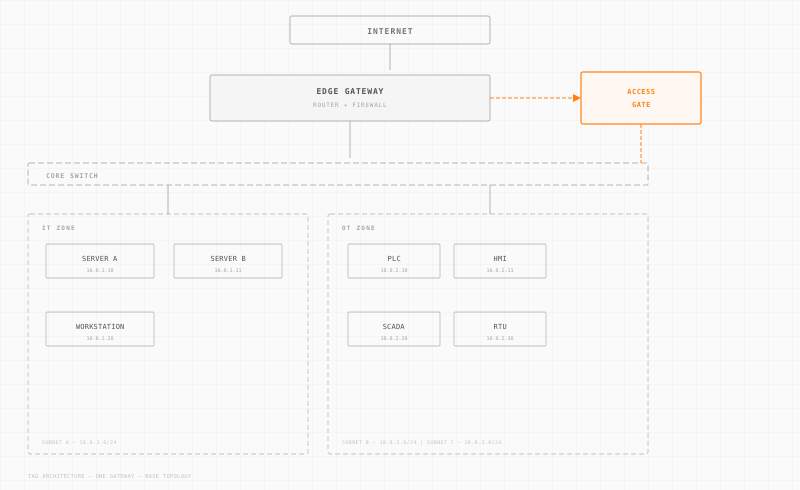
Network Diagnostics is the process of identifying, analyzing, and resolving issues within a computer network to ensure optimal performance and security. This involves the use of various tools and techniques to monitor network health, troubleshoot problems, and test network functionalities.
Understanding Network Diagnostics in OT/IT Cybersecurity
In the realm of Operational Technology (OT) and Information Technology (IT), network diagnostics plays a crucial role in maintaining the security and efficiency of networked systems. As industrial and manufacturing environments increasingly rely on networked systems for operational control and data exchange, the integrity of these networks becomes paramount. Network diagnostics helps ensure that network components are functioning correctly and that any vulnerabilities are identified and addressed promptly.
In environments where systems control physical processes, like manufacturing plants, power grids, or transport systems, network issues can lead to significant disruptions. For example, an undiagnosed network bottleneck could delay real-time data transmission, causing delays in automated processes or even operational failures.
Why It Matters
Ensuring Network Reliability
Network diagnostics is essential for ensuring the reliability of complex networks. Industrial networks often support critical operations, where downtime can lead to safety hazards or significant financial losses. By regularly diagnosing the network, organizations can proactively manage issues before they escalate into severe problems.
Enhancing Cybersecurity
In the context of cybersecurity, network diagnostics is vital for identifying unauthorized access or data breaches. By continuously monitoring network traffic and performance, organizations can detect anomalies that may indicate a security threat. This aligns with compliance standards such as NIST 800-171 and CMMC, which emphasize the need for robust cybersecurity measures to protect sensitive data and operations.
Supporting Compliance
Networks in industrial and critical environments must adhere to various regulatory standards, including IEC 62443, which focuses on the security of industrial automation and control systems. Network diagnostics helps organizations meet these standards by providing the necessary tools to monitor and report on network security and performance.
Facilitating Troubleshooting
When network issues arise, having a robust network diagnostics process in place enables quick identification and resolution of problems. This minimizes downtime and ensures that operations can continue with minimal disruption. Network troubleshooting, a component of diagnostics, involves pinpointing the source of a problem, be it a faulty router, a misconfigured device, or an external attack.
In Practice
Consider a scenario in a manufacturing plant where the production line is halted due to a network issue. By utilizing network diagnostics, the IT team can quickly identify that the issue is due to an overloaded switch. With this information, they can reroute the traffic or replace the hardware, restoring the network's functionality and minimizing the impact on production.
Network testing, another aspect of diagnostics, involves simulating network conditions to evaluate performance under different scenarios. This can include stress tests to ensure the network can handle peak loads or penetration tests to assess vulnerabilities to potential cyber-attacks.
Related Concepts
- Network Monitoring: Continuous observation of a network's performance to detect and respond to issues.
- Network Security: Measures taken to protect the integrity, confidentiality, and availability of a network and its data.
- Incident Response: Procedures and actions taken to handle and mitigate the impact of a network security breach.
- Firewall: A network security device that controls incoming and outgoing network traffic based on predetermined security rules.
- Intrusion Detection System (IDS): A device or software that monitors a network for malicious activity or policy violations.