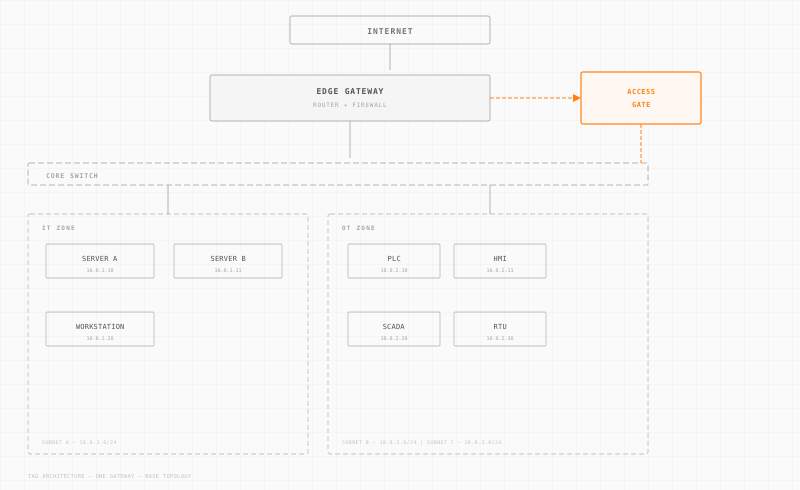
A security audit, also known as a cybersecurity audit or security assessment, is a systematic evaluation of an organization's information systems, policies, and operations to ensure that they comply with established security standards and practices. It involves examining the effectiveness of security controls, identifying vulnerabilities, and ensuring that security measures align with regulatory requirements.
Understanding Security Audits in OT/IT Cybersecurity
In the context of Operational Technology (OT) and Information Technology (IT) cybersecurity, a security audit is critical for assessing the protective measures of industrial control systems, manufacturing equipment, and critical infrastructure networks. These audits are essential for maintaining the integrity, confidentiality, and availability of sensitive data and operational processes.
Security audits in OT and IT environments typically involve a thorough examination of network configurations, security policies, access controls, and incident response strategies. They assess the security posture of both digital assets and physical components, ensuring that the entire ecosystem is protected from potential cyber threats.
Importance in Industrial, Manufacturing & Critical Environments
For sectors such as industrial, manufacturing, and critical infrastructure, security audits are vital for several reasons:
-
Regulatory Compliance: Organizations must adhere to various cybersecurity standards and regulations, such as NIST 800-171, CMMC, and IEC 62443. Security audits help verify compliance with these frameworks, which set guidelines for protecting sensitive data and systems.
-
Risk Management: By identifying vulnerabilities and assessing the effectiveness of security controls, audits provide insights into potential risks. This enables organizations to prioritize security enhancements and allocate resources effectively.
-
Operational Continuity: In environments where downtime can have severe consequences, such as in critical infrastructure, security audits ensure that systems are resilient against cyber incidents that could disrupt operations.
-
Trust and Assurance: Regular security audits demonstrate to stakeholders, including customers and partners, that the organization is committed to maintaining a robust security posture. This trust is crucial for business continuity and reputation management.
In Practice
Consider a manufacturing facility that relies on a network of connected devices for automation and process control. A security audit in this context would involve:
-
Network Assessment: Evaluating the security of network connections between devices, including firewalls, routers, and switches, to ensure that unauthorized access is prevented.
-
Policy Review: Examining security policies for device management, data handling, and user access to confirm that they meet regulatory standards and are effectively enforced.
-
Vulnerability Testing: Conducting penetration tests and vulnerability scans to identify weaknesses in the network that could be exploited by cyber attackers.
-
Incident Response Evaluation: Reviewing incident response plans to ensure that the organization is prepared to detect, respond to, and recover from cybersecurity incidents promptly.
Related Concepts
- Risk Assessment: Evaluating potential threats and vulnerabilities to determine their impact on an organization.
- Compliance Audit: An audit focused specifically on verifying adherence to regulatory standards and legal requirements.
- Penetration Testing: Simulated cyberattacks conducted to identify and rectify security vulnerabilities.
- Network Security: Measures taken to protect the integrity, confidentiality, and availability of networked systems.
- Vulnerability Management: The ongoing process of identifying, evaluating, and mitigating security vulnerabilities.