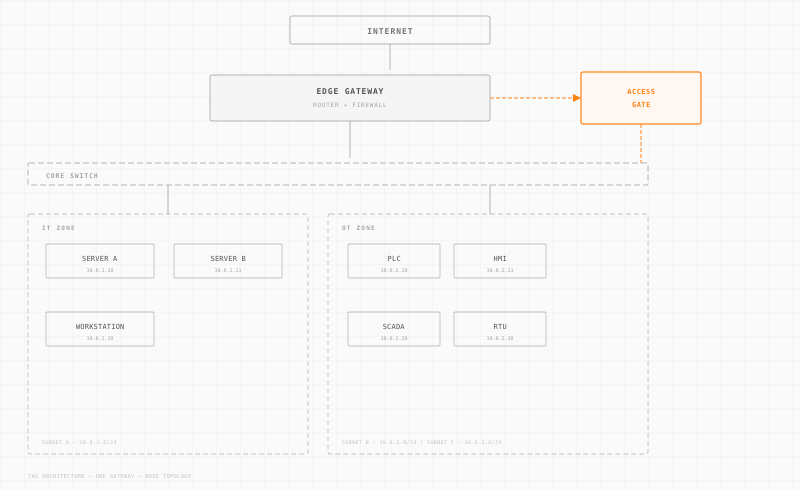
Security patching refers to the process of applying updates to software systems to fix vulnerabilities that could be exploited by malicious actors. These updates, often called vulnerability patches, are essential for maintaining the integrity, confidentiality, and availability of information systems, especially in environments where the cost of a breach is exceptionally high.
Security Patching in OT/IT Cybersecurity
In the context of Operational Technology (OT) and Information Technology (IT) cybersecurity, security patching becomes a critical function due to the unique challenges and high stakes involved. OT systems, which control physical processes in industrial and manufacturing environments, often operate on legacy software that may not have been originally designed with security in mind. These systems are integral to critical infrastructure, including energy production, water treatment, and manufacturing, making them prime targets for cyberattacks.
Unlike typical IT environments, OT systems have longer life cycles and require high availability. Therefore, applying patches is not as straightforward as in IT environments. Downtime is costly and, in some cases, could disrupt essential services. As a result, the timing and method of applying these patches must be carefully planned and executed to minimize operational impact while ensuring security.
Why Security Patching Matters
Security patching is crucial for several reasons:
-
Risk Mitigation: Unpatched systems are vulnerable to exploitation. Attackers often exploit known vulnerabilities that have available patches, making timely patching a critical defense mechanism.
-
Compliance and Standards: Adhering to security patching protocols is often a requirement of cybersecurity frameworks and standards. For instance, NIST 800-171 and CMMC emphasize the importance of managing system vulnerabilities and ensuring that patches are applied in a timely manner.
-
Industrial and Manufacturing Environments: In these settings, a cyberattack could lead not only to data breaches but also to physical damage or safety hazards. Patching reduces the chance of such incidents, protecting both the workforce and the public.
Standards and Best Practices
Several standards guide the implementation of security patching:
-
NIST 800-171: This standard provides a framework for protecting controlled unclassified information in systems and organizations, emphasizing the need for regular patch management.
-
CMMC: The Cybersecurity Maturity Model Certification mandates that organizations working with the U.S. Department of Defense implement a comprehensive cybersecurity program, including regular patching.
-
IEC 62443: This series of standards focuses on the security of industrial automation and control systems and stresses the importance of managing vulnerabilities through timely patching.
In Practice
In practice, an effective security patching strategy involves several steps:
-
Assessment: Organizations must continuously assess their systems to identify vulnerabilities and determine which patches are necessary.
-
Prioritization: Not all patches are created equal. Critical patches that address high-risk vulnerabilities should be prioritized.
-
Testing: Especially in OT environments, testing patches in a controlled setting before deployment is crucial to avoid disruption.
-
Implementation: Deploy the patches according to a well-defined schedule that minimizes impact on operations.
-
Verification: After application, verify that the patches have been successfully implemented and have not introduced new issues.
Related Concepts
- Vulnerability Management: The process of identifying, classifying, and addressing vulnerabilities within an organization’s systems.
- Patch Management: A broader practice that includes the identification, deployment, and documentation of patches across an organization.
- Software Updates: General updates that may include new features, bug fixes, and security patches.
- Zero-Day Exploit: A cyberattack that occurs before or on the same day a vulnerability is discovered, highlighting the importance of swift patching.
- Change Management: The discipline that ensures all changes to an IT system are introduced in a controlled and coordinated manner, minimizing the impact on operations.