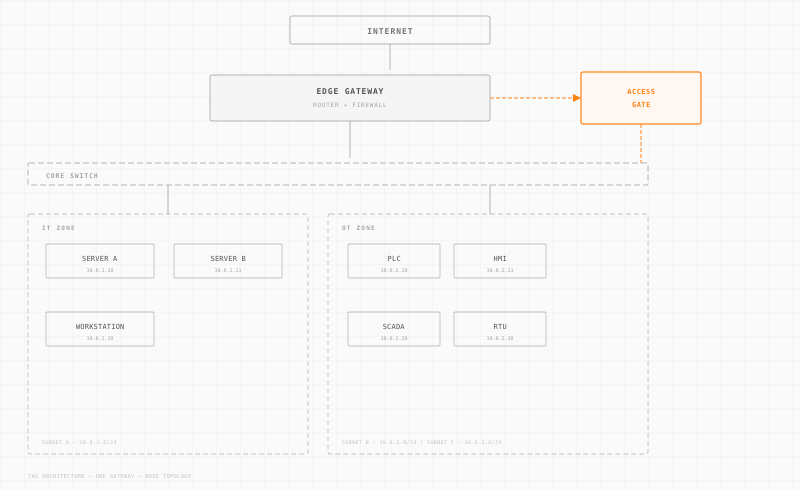
A zero-day exploit refers to a cyberattack that targets a software vulnerability unknown to the software's developer or the public. This type of exploit occurs before a patch or mitigation strategy is available, making it particularly dangerous and difficult to defend against.
Understanding Zero-Day Exploits in OT/IT Cybersecurity
In the context of Operational Technology (OT) and Information Technology (IT) cybersecurity, zero-day exploits are critical threats due to their ability to bypass existing security measures. OT environments, often found in industrial, manufacturing, and critical infrastructure sectors, can be particularly vulnerable to these attacks. This is because OT systems frequently rely on legacy technologies that are not easily updated, and any disruption can lead to significant operational downtime or even physical damage.
Zero-day exploits take advantage of unknown vulnerabilities, meaning that neither the software developer nor the users are aware of the flaw until the exploit is active. This lack of awareness allows attackers to infiltrate systems undetected, potentially leading to unauthorized access, data theft, or control over critical systems.
Importance in Industrial, Manufacturing, and Critical Environments
For industries reliant on complex networks of OT and IT systems, the implications of a zero-day exploit can be severe. In manufacturing, for instance, an exploit could halt production lines, leading to financial losses and supply chain disruptions. In critical infrastructure, such as energy or water utilities, the stakes are even higher, as a successful attack could jeopardize public safety and national security.
The interconnected nature of OT and IT systems in these environments means that a zero-day exploit can quickly propagate, affecting multiple components and systems. This highlights the necessity for robust cybersecurity practices and the implementation of a Zero Trust architecture, where no user or system is automatically trusted, and all access is continuously verified.
Standards and Compliance
Various standards and frameworks emphasize the importance of defending against zero-day exploits. NIST Special Publication 800-171 and the Cybersecurity Maturity Model Certification (CMMC) provide guidelines for protecting Controlled Unclassified Information (CUI) in non-federal systems. These standards advocate for proactive vulnerability management and continuous monitoring to identify and mitigate threats promptly.
IEC 62443 offers a comprehensive framework for securing industrial automation and control systems, promoting the integration of cybersecurity into every aspect of OT systems.
Why It Matters
Addressing zero-day exploits is crucial for maintaining the integrity and reliability of industrial and critical infrastructures. The dynamic and often unpredictable nature of these attacks requires organizations to adopt a proactive cybersecurity posture. This includes investing in threat intelligence, implementing advanced monitoring tools, and fostering an organizational culture of cybersecurity awareness.
Organizations can also benefit from collaboration with trusted vendors and cybersecurity experts who specialize in identifying and mitigating zero-day vulnerabilities. By staying informed about the latest threat vectors and continuously updating their security strategies, businesses can better protect their assets and operations from the potentially devastating impacts of zero-day exploits.
Related Concepts
- Vulnerability Management
- Threat Intelligence
- Zero Trust Architecture
- Patch Management
- Intrusion Detection Systems (IDS)