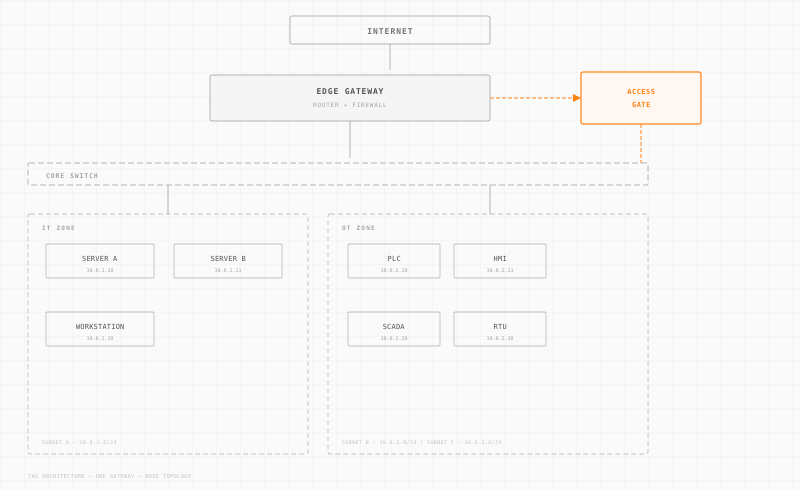
Security tokens are physical or digital devices that provide a means of authenticating a user's identity, granting access to a protected system or resource. They are an essential component in the realm of cybersecurity, particularly in environments where robust access control is vital, such as industrial, manufacturing, and critical infrastructure sectors.
Understanding Security Tokens in OT/IT Cybersecurity
In the context of Operational Technology (OT) and Information Technology (IT) cybersecurity, security tokens play a pivotal role in safeguarding sensitive systems from unauthorized access. These tokens can be hardware devices or software-based solutions that generate a unique and temporary code for user authentication. They form part of a multi-factor authentication (MFA) approach, which is paramount in enhancing security measures by requiring more than one form of verification before granting access.
Types of Security Tokens
-
Hardware Tokens: These are physical devices, such as USB keys or smart cards, that users must possess to access a system. Hardware tokens are often used in environments where physical security is just as crucial as digital security.
-
Software Tokens: These are digital applications or programs, typically installed on a smartphone or computer, that generate a temporary authentication code. Software tokens offer flexibility and are easily distributed across global teams without the logistical challenges of physical device deployment.
-
One-Time Password (OTP) Tokens: These tokens generate a unique password that can be used only once for authentication purposes. OTPs can be delivered via SMS, email, or generated by a dedicated token device.
Relevance to Industrial and Critical Environments
In industrial, manufacturing, and other critical environments, ensuring that only authorized personnel have access to sensitive systems is crucial. Security tokens help mitigate risks by providing an additional layer of security that is harder to compromise than traditional password-only systems. Given the rise of cyber threats targeting critical infrastructure, employing authentication tokens is a key strategy in protecting against breaches that could disrupt operations or lead to catastrophic failures.
Why It Matters
Security tokens are vital in achieving compliance with various cybersecurity standards and regulations that govern industrial and critical infrastructure sectors. For example:
- NIST 800-171: This standard emphasizes the need for protecting controlled unclassified information (CUI) in non-federal systems, where MFA using security tokens can be an effective control.
- CMMC (Cybersecurity Maturity Model Certification): Requires organizations to demonstrate robust access control measures, including the use of security tokens, to achieve higher maturity levels.
- IEC 62443: A standard focusing on the security of industrial automation and control systems, where security tokens can help enforce strict access controls as part of the system's defense-in-depth strategy.
In Practice
Consider a manufacturing plant where critical control systems are managed. Deploying hardware tokens ensures that only personnel with the physical device can access control systems, thus reducing the risk of unauthorized access. Similarly, software tokens provide an additional layer of authentication for remote employees or contractors accessing the network, ensuring that access is granted only to verified users.