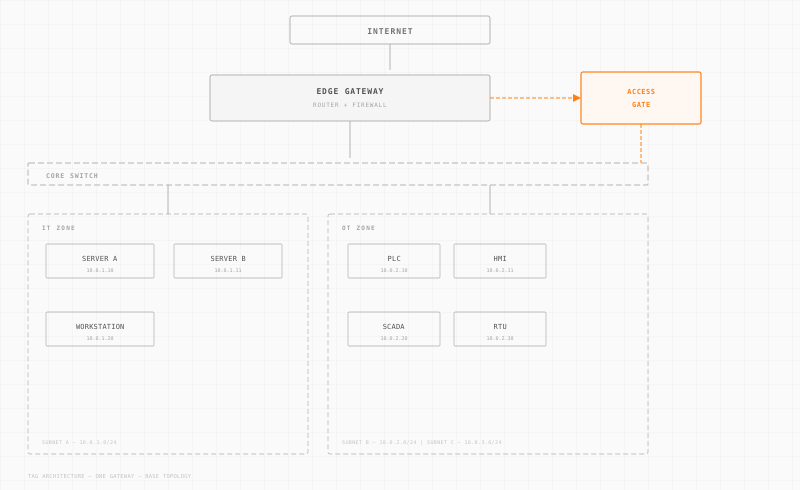
Standard Operating Procedures (SOPs) are detailed, written instructions designed to ensure that consistent and uniform actions are taken to achieve a predetermined outcome. In the context of OT/IT cybersecurity, SOPs are essential for maintaining security protocols, compliance with regulations, and ensuring smooth operation within industrial, manufacturing, and critical infrastructure environments.
Understanding SOPs in OT/IT Cybersecurity
In operational technology (OT) and information technology (IT) environments, Standard Operating Procedures serve as the backbone of reliable and secure operations. These procedures outline the specific actions necessary for tasks ranging from routine maintenance to incident response. SOPs are vital in OT/IT cybersecurity for defining how to manage security risks, handle data breaches, and respond to cybersecurity incidents effectively.
SOPs in these environments must be meticulously crafted to address the unique challenges of combining IT systems with OT controls, where the latter often involves critical physical processes. This integration requires SOPs that account for both cybersecurity threats and the operational continuity of physical systems.
Importance in Industrial, Manufacturing, & Critical Environments
In industrial and manufacturing sectors, as well as other critical environments, SOPs play a crucial role in maintaining both safety and efficiency. These sectors often involve complex machinery and interdependent systems that, if compromised, can lead to significant downtime, financial loss, or even safety hazards.
Standard Operating Procedures help ensure that cybersecurity measures are standardized across the board, reducing the risk of human error and ensuring compliance with regulatory standards such as NIST 800-171, CMMC (Cybersecurity Maturity Model Certification), NIS2 (Network and Information Systems Directive 2), and IEC 62443.
Regulatory Compliance
Adhering to SOPs is critical for meeting various cybersecurity regulations and standards:
-
NIST 800-171: This standard requires organizations to protect controlled unclassified information in non-federal systems and organizations. SOPs help in implementing the required security controls.
-
CMMC: SOPs are a key element in achieving and maintaining the maturity levels required for CMMC, which dictates cybersecurity practices for organizations in the defense industrial base.
-
NIS2: This directive focuses on ensuring a high level of security of network and information systems across the European Union. SOPs contribute to meeting these stringent requirements by ensuring consistent cybersecurity practices.
-
IEC 62443: This series of standards is specifically designed for industrial automation and control systems security, where SOPs are essential in implementing and maintaining effective security measures.
In Practice
Consider a manufacturing plant where an SOP might outline the exact steps to be taken in the event of a detected cybersecurity threat. The procedure would detail the process for identifying the threat, isolating affected systems, notifying relevant personnel, and implementing recovery protocols. By following these predefined steps, the plant can minimize disruption and maintain operational integrity.
Additionally, SOPs can guide regular security audits and system updates, ensuring that all components of the OT/IT environment are assessed and secured against potential vulnerabilities. This is particularly important in environments where downtime can have severe operational and financial implications.
Related Concepts
- Incident Response Plan: A structured approach to handling and managing the aftermath of a security breach or cyberattack.
- Change Management: The process of managing alterations to IT and OT systems in a controlled and systematic manner.
- Risk Assessment: The identification and analysis of potential risks that could negatively impact key business initiatives or projects.
- Compliance Auditing: The process of reviewing and evaluating an organization's adherence to regulatory guidelines.
- Security Policy: A set of guidelines and rules that dictate how an organization manages and protects its information assets.