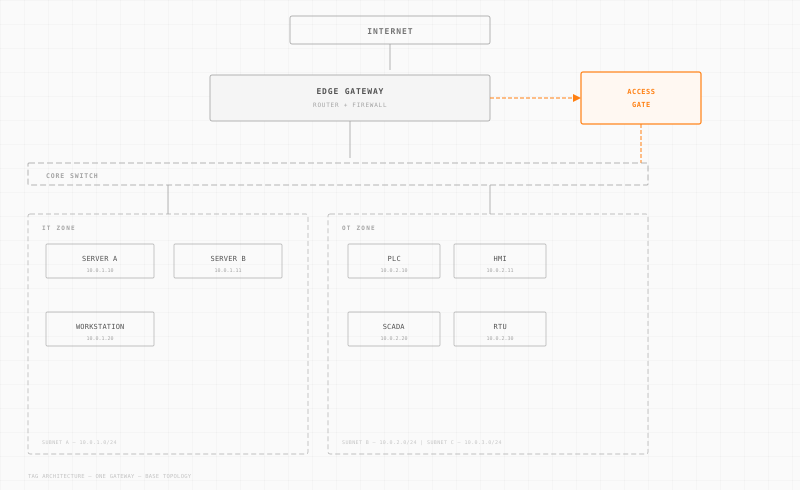
Cloud Security refers to the set of policies, technologies, and controls deployed to protect data, applications, and infrastructure associated with cloud computing environments. It encompasses a wide range of practices to safeguard sensitive information and ensure compliance with regulatory standards across public, private, and hybrid cloud platforms.
Understanding Cloud Security
In the context of OT/IT cybersecurity, cloud security is particularly important as more organizations in industrial, manufacturing, and critical environments transition to cloud-based solutions. These environments often integrate complex systems that require seamless communication between operational technology (OT) and information technology (IT) networks. As these systems leverage cloud services for data storage, processing, and collaboration, ensuring the security of these services becomes paramount.
Core Components
Cloud security encompasses several components, including:
- Data protection: Techniques such as encryption and tokenization are used to protect data at rest, in transit, and in use.
- Identity and access management (IAM): Ensures that only authorized users have access to cloud resources.
- Threat detection and response: Tools and processes to detect and mitigate potential security threats in real-time.
- Compliance: Ensures that cloud services meet industry standards and regulations such as NIST 800-171, CMMC, and NIS2.
Relevance to OT/IT
For industrial sectors, cloud security plays a vital role in protecting the integrity and confidentiality of sensitive data, such as proprietary manufacturing processes and critical infrastructure operations. Secure cloud systems enable companies to leverage advanced technologies like IoT and AI within their production environments without compromising security.
Why It Matters
The transition to cloud-based infrastructures offers numerous advantages, including scalability, cost efficiency, and enhanced collaboration. However, it also introduces new security challenges and attack vectors that must be addressed to protect critical environments.
For instance, a breach in cloud security could lead to unauthorized access to sensitive operational data, resulting in operational downtime or intellectual property theft. Compliance with standards like IEC 62443 can help organizations implement robust cloud security measures, ensuring that they meet the necessary requirements to protect their operations.
Compliance and Standards
- NIST 800-171: Provides guidelines on protecting controlled unclassified information in non-federal systems, applicable to cloud environments.
- CMMC: Establishes cybersecurity practices and processes for defense contractors, including those using cloud services.
- NIS2: Aims to enhance cybersecurity across EU member states, impacting cloud providers offering services to critical sectors.
- IEC 62443: Focuses on security for industrial automation and control systems (IACS), offering frameworks applicable to cloud-based solutions in these environments.
In Practice
Consider a manufacturing facility that uses a cloud-based system to manage its supply chain operations. Cloud security measures would be essential to protect the integrity of the supply chain data, which includes sensitive information about partners, logistics, and inventory levels. Implementing strong cloud security protocols ensures that this data remains confidential and is only accessible to authorized personnel, thereby maintaining operational efficiency and security.