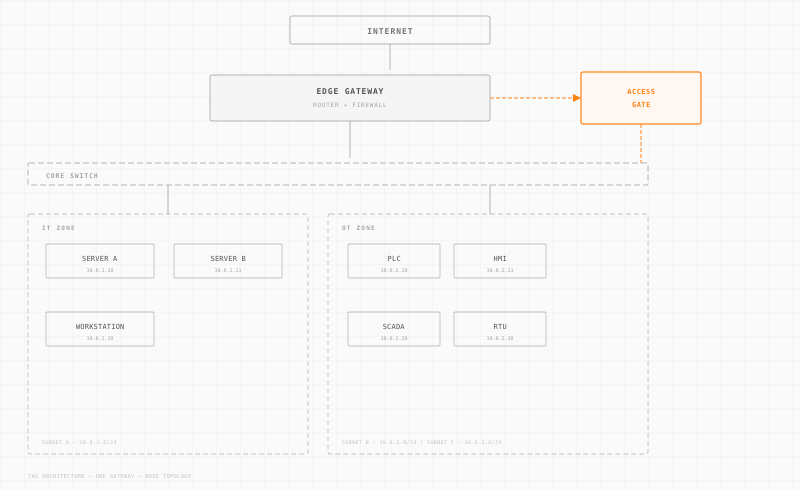
Configuration Management (CM) is a process for maintaining consistency of a system's performance, functional, and physical attributes with its requirements, design, and operational information throughout its life. In the context of OT/IT cybersecurity, configuration management involves managing the security features and settings of hardware, software, and firmware to effectively safeguard industrial, manufacturing, and critical infrastructure systems.
Understanding Configuration Management in OT/IT Cybersecurity
In operational technology (OT) and information technology (IT) environments, configuration management is critical to ensure that systems are secure and operate as expected. It involves keeping track of all the configurations or settings of devices and systems to prevent unauthorized changes that could lead to vulnerabilities. This includes everything from firewalls and routers to industrial control systems and servers within a network.
Configuration management ensures that all components are identified, documented, and maintained, which is crucial for adhering to various cybersecurity standards and frameworks. For instance, NIST 800-171 emphasizes the need for configuration management to protect Controlled Unclassified Information (CUI) in non-federal systems. Similarly, the Cybersecurity Maturity Model Certification (CMMC) requires organizations to implement configuration management practices to secure their environments.
Importance in Industrial, Manufacturing, and Critical Environments
Configuration management is particularly vital in environments where OT and IT intersect, such as in manufacturing plants, utility grids, and other critical infrastructure sectors. These environments often use legacy systems that may not have been designed with cybersecurity in mind, making them susceptible to cyber threats. Proper configuration management helps in mitigating these risks by ensuring all systems and devices are consistently configured according to security policies and standards.
A misconfigured system can become an entry point for attackers, potentially leading to significant disruptions, safety hazards, and financial losses. In manufacturing, for instance, incorrect configurations can lead to production downtime, affecting not only the business but also the broader supply chain.
Relevant Standards and Guidelines
Several standards guide the implementation of configuration management:
- NIST 800-171: Part of its requirements focus on ensuring that only authorized users have access to CUI, which is supported by maintaining strict configuration management practices.
- CMMC: This model includes specific practices related to configuration management at various maturity levels, emphasizing its role in a robust cybersecurity posture.
- IEC 62443: This set of standards provides a framework for securing Industrial Automation and Control Systems (IACS) and includes provisions on configuration management to ensure system integrity and security.
In Practice
A practical example of configuration management in action is the regular auditing of firewall configurations to ensure they are aligned with the latest security policies. This might involve verifying that only necessary ports are open and that rules are updated to block known malicious IP addresses. Another example is using configuration management databases (CMDBs) to maintain an inventory of system configurations, enabling quick identification and rectification of unauthorized changes.
Configuration management also involves automated tools that can monitor changes in real-time and alert IT teams to discrepancies, thus fostering a proactive approach to cybersecurity.
Related Concepts
- Change Management: The process of managing changes to systems and configurations to minimize disruption and maintain security.
- Asset Management: The practice of tracking and managing IT and OT assets to ensure they are updated and protected.
- Patch Management: Involves keeping software and systems up to date to protect against vulnerabilities.
- Access Control: Ensures that only authorized individuals can make changes to system configurations.
- Incident Response: The plan and processes in place to respond to security incidents, often informed by configuration management practices.