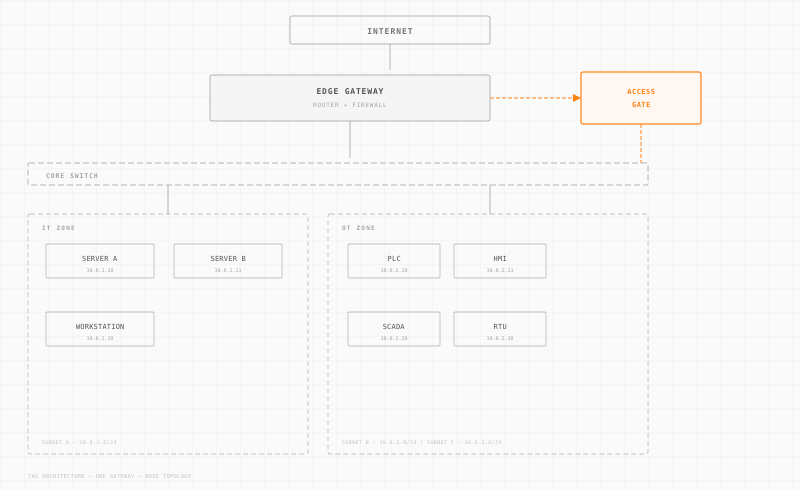
Asset Management refers to the systematic process of developing, operating, maintaining, upgrading, and disposing of assets in a cost-effective manner. In the context of OT/IT cybersecurity, asset management is crucial for identifying and managing the lifecycle of both operational technology (OT) and information technology (IT) assets within an organization.
Understanding Asset Management in OT/IT Cybersecurity
In the realm of cybersecurity, asset management involves maintaining an up-to-date inventory of all hardware and software assets, understanding their configurations, and assessing their security posture. This is critical for safeguarding industrial, manufacturing, and critical infrastructure environments against cyber threats.
OT vs. IT Asset Management
- IT Asset Management typically deals with computers, servers, and networking equipment. It focuses on software licenses, hardware lifecycle management, and ensuring compliance with IT policies.
- OT Asset Tracking, on the other hand, involves tracking machinery, sensors, PLCs (Programmable Logic Controllers), and other industrial control systems (ICS) that are often integrated into physical processes.
Both types of asset management require a comprehensive understanding of the assets' functions, connectivity, and configurations to effectively secure them against vulnerabilities.
Why Asset Management Matters
Effective asset management is crucial for several reasons:
-
Security Risk Management: By knowing what assets are in use and their configurations, organizations can better assess vulnerabilities and implement appropriate security measures.
-
Compliance: Regulatory standards such as NIST 800-171 and CMMC mandate rigorous asset management practices to ensure that sensitive information is protected from unauthorized access.
-
Operational Efficiency: Proper asset management helps in streamlining operations, reducing downtime, and ensuring that equipment is functioning optimally, which is vital for productivity in industrial and critical environments.
Reference to Standards
- NIST 800-171: Emphasizes the importance of managing information systems and protecting Controlled Unclassified Information (CUI) by maintaining an inventory of system components.
- CMMC: Cybersecurity Maturity Model Certification requires asset management as part of its practices to ensure defense contractors can protect sensitive data.
Examples in Practice
In a manufacturing plant, asset management might involve keeping an updated inventory of all PLCs, their firmware versions, and the software applications they interact with. This enables quick identification and mitigation of vulnerabilities, ensuring that production lines are not disrupted by cyber incidents.
In IT environments, asset management can include tracking software licenses to ensure compliance and avoid potential legal issues. It also involves ensuring that all systems are patched and updated to prevent exploitation of known vulnerabilities.
Related Concepts
- Configuration Management: The process of maintaining computer systems, servers, and software in a desired, consistent state.
- Vulnerability Management: Identifying, evaluating, treating, and reporting on security vulnerabilities in systems and the software that runs on them.
- Patch Management: The process of managing a network of computers by regularly performing system updates.
- Incident Response: The approach taken by an organization to prepare for, detect, contain, and recover from a data breach or cyberattack.
- Network Segmentation: Dividing a computer network into smaller parts to improve performance and security.