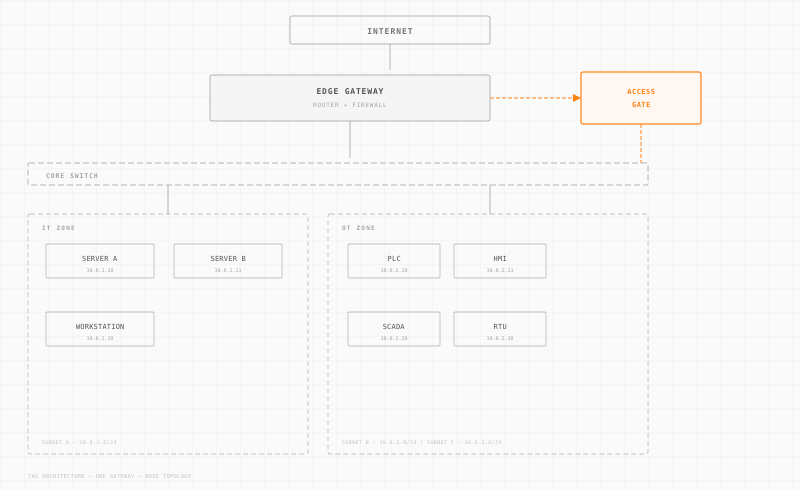
Threat intelligence refers to the collection, analysis, and utilization of information about potential or existing cyber threats that can impact an organization's security posture. It encompasses data-driven insights that help organizations anticipate, identify, and respond to cyber threats effectively.
Understanding Threat Intelligence in OT/IT Cybersecurity
In the realm of operational technology (OT) and information technology (IT) cybersecurity, threat intelligence plays a critical role. It involves gathering data from various sources, including public and private threat feeds, security incidents, and open-source information. This data is then analyzed to discern patterns, trends, and emerging threats that could target critical infrastructure and industrial systems.
Cyber threat intelligence (CTI) is particularly crucial for environments where both IT and OT systems coexist. These systems often have different security requirements and risk profiles, making the integration of CTI essential for comprehensive threat management. In OT environments, where systems control physical processes, the consequences of cyber threats can extend beyond data breaches to physical damage or disruption of operations.
Why It Matters for Industrial, Manufacturing & Critical Environments
In industrial and manufacturing settings, where uninterrupted operations are vital, the impact of cyber threats can be severe. Threat intelligence provides these sectors with the foresight needed to mitigate risks before they materialize into incidents. By leveraging CTI, organizations can prioritize vulnerabilities, enhance incident response strategies, and allocate resources efficiently.
Threat intelligence is aligned with several standards and frameworks that guide cybersecurity practices in critical environments. For instance, NIST SP 800-171 emphasizes the protection of controlled unclassified information in non-federal systems, advocating for the integration of threat intelligence to enhance risk management. The Cybersecurity Maturity Model Certification (CMMC) requires defense contractors to demonstrate proactive threat identification and mitigation capabilities, where CTI is a key component. Similarly, the IEC 62443 standards underscore the importance of threat intelligence in securing industrial automation and control systems.
In Practice
Consider a manufacturing facility that integrates CTI into its cybersecurity operations. By subscribing to industry-specific threat feeds, the facility's security team can receive timely alerts about threats targeting similar organizations. For example, if a new strain of ransomware is identified that exploits a vulnerability in widely-used industrial control systems, the facility can proactively apply patches or implement protective controls to mitigate the risk.
Moreover, threat intelligence enables organizations to perform threat hunting activities, where security teams actively search for indicators of compromise within their networks. This proactive approach helps identify potential breaches early, reducing the time to detect and respond to incidents.
Related Concepts
- Vulnerability Management: The practice of identifying, evaluating, and mitigating vulnerabilities within an organization's systems.
- Incident Response: The process of managing and responding to security breaches or cyber incidents.
- Security Information and Event Management (SIEM): A technology that supports threat detection, compliance, and security incident management through real-time analysis of security alerts.
- Intrusion Detection System (IDS): A system that monitors network traffic for suspicious activity and issues alerts when potential threats are detected.
- Risk Management: The process of identifying, assessing, and controlling threats to an organization's capital and earnings.